BareDezyne Cat Pettery · Northern California
Sphynx Cat FAQ
Honest answers to the questions people actually ask — about Sphynx cats, ethical breeding, health testing, and what it's really like to live with the world's most affectionate cat.
General Sphynx Questions
What exactly is a Sphynx cat?
The Sphynx is a natural breed of domestic cat best known for its minimal coat — most Sphynx cats appear hairless, though they actually have a very fine, barely-there layer of downy fuzz covering their body. This gives their skin a texture that many people describe as warm suede or a warm peach.
Beyond their striking appearance, Sphynx cats are deeply social and emotionally intelligent animals. They form intense bonds with their families, are endlessly curious, and have a reputation for being the most people-oriented cat breed in existence. At BareDezyne, we've spent over a decade breeding Sphynx cats and can honestly say — once you share your home with one, no other breed quite compares.
Are Sphynx cats actually hairless?
Technically, Sphynx cats are not completely hairless — they have a fine, nearly invisible coat that feels like soft velvet or warm suede when you run your hand over them. In bright light you may notice a subtle peach-fuzz appearance, especially on their ears, face, and legs.
What they don't have is a traditional protective coat of fur. This is what makes them so visually unique and what contributes to their warmth-seeking nature. Because they have no insulating coat, their skin temperature tends to run slightly higher than a regular cat's — which is part of why Sphynx cats feel so deliciously warm to cuddle with.
Where did Sphynx cats originate?
The modern Sphynx breed traces its origins to Toronto, Canada, where a naturally hairless kitten named Prune was born in 1966. Breeders recognized the uniqueness of this natural mutation and began a careful selective breeding program to develop the breed we know today.
Despite the "Sphynx" name evoking ancient Egypt, the breed itself is entirely modern. The Sphynx was recognized by TICA (The International Cat Association) and CFA (Cat Fanciers' Association) and has grown into one of the most beloved and recognized breeds in the world — prized for its extraordinary personality as much as its unique appearance.
What do Sphynx cats look like up close?
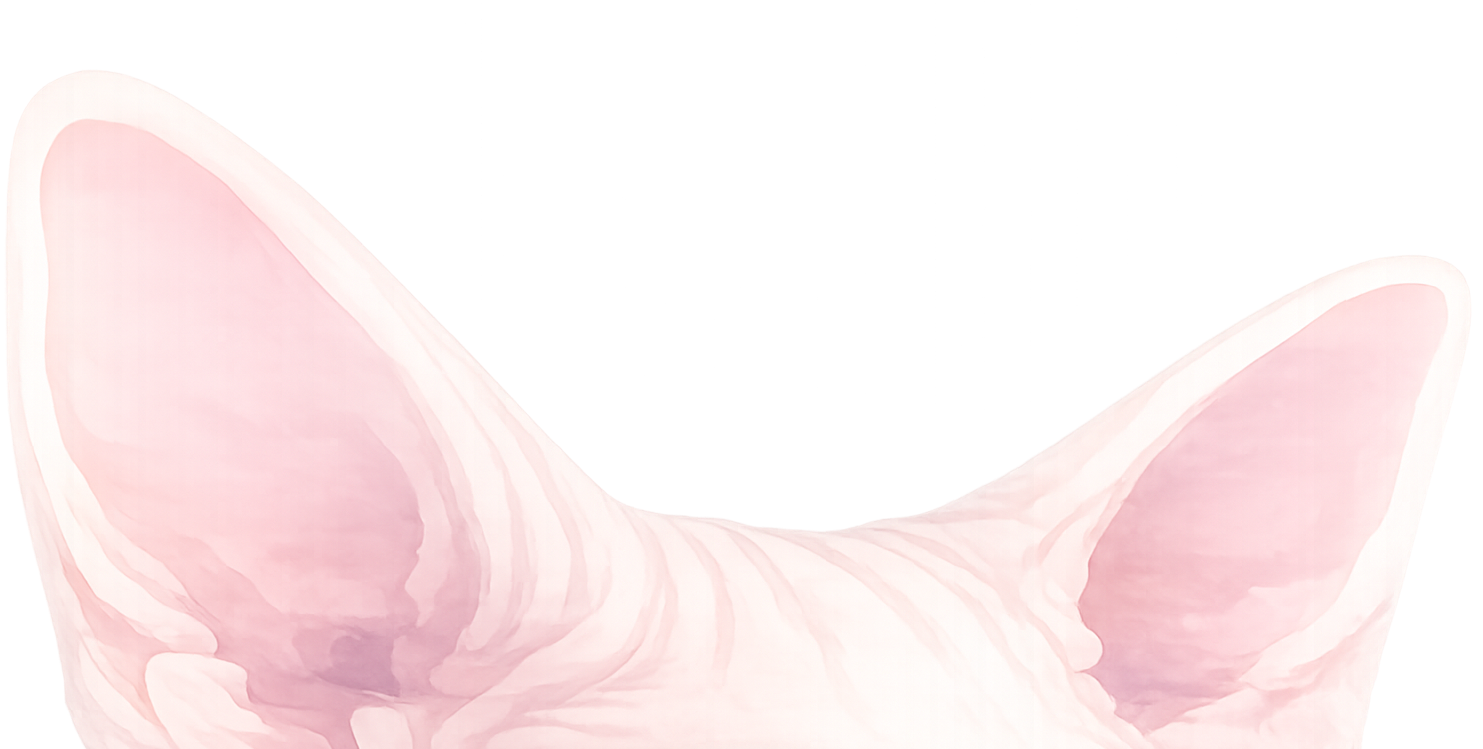
Sphynx cats have some of the most expressive faces in the feline world. Their large lemon-shaped eyes, broad cheekbones, prominent cheekbones, and huge ears give them an almost alien elegance. Their skin folds and wrinkles — particularly around the forehead, neck, and belly — are one of their most iconic and beloved features.
Their bodies are muscular and surprisingly solid for how sleek they appear. Most Sphynx cats have a rounded abdomen (often called a "pot belly"), especially after eating, which only adds to their charm. They come in virtually every color and pattern a traditional cat might have — the pigmentation is in their skin rather than their fur, so you can find everything from black Sphynx to tortoiseshell to colorpoint markings.
How long do Sphynx cats live?
A well-bred, health-tested Sphynx cat typically lives between 12 and 16 years, with many reaching their late teens when raised in a loving indoor home with good nutrition and regular veterinary care. Some Sphynx cats have been known to live even longer.
Lifespan is heavily influenced by genetics, which is exactly why responsible breeders invest in rigorous health testing — particularly for HCM (Hypertrophic Cardiomyopathy), a hereditary heart condition that can affect the breed. At BareDezyne, every cat in our breeding program is HCM-tested, which helps ensure that the kittens we produce are starting life on the strongest possible genetic foundation.
How big do Sphynx cats get?
Sphynx cats are a medium-sized breed. Males typically weigh between 8 and 12 pounds and females between 6 and 9 pounds, though this can vary by lineage. Despite their sometimes delicate appearance, they're quite muscular and surprisingly heavy for their size.
Their lack of fur can make them look petite, but pick one up and you'll immediately notice how solid and substantial they are. That sturdy, well-muscled body is actually part of the breed standard — Sphynx cats should have good bone structure and a strong, athletic frame beneath all those adorable wrinkles.
Are Sphynx cats good family pets?
Sphynx cats are genuinely one of the best cat breeds for family life. They're social rather than solitary, affectionate rather than aloof, and curious rather than cautious. They tend to integrate naturally into households with children, other cats, and even friendly dogs — especially when socialized thoughtfully from kittenhood.
At BareDezyne, our kittens are raised in our home from birth, which means they grow up surrounded by everyday family life — the sounds, the movement, different people. That early exposure is what shapes the confident, warm personalities our families fall in love with. A well-socialized Sphynx kitten from a reputable home cattery doesn't just join your family — it becomes the heart of it.
Do Sphynx cats get along with other cats and dogs?
In most cases, yes — Sphynx cats are known for being unusually social and adaptable, even by cat standards. They tend to do very well with other cats and can form genuine friendships. Many Sphynx owners report that their cats actively seek out companionship and will happily groom, sleep with, and play with feline housemates.
With dogs, success really depends on the dog's temperament and how the introduction is handled. A calm, cat-friendly dog introduced slowly is usually accepted by a Sphynx quite readily. We always recommend a gradual introduction process — separate spaces first, scent swapping, then supervised meetings — and it works beautifully in the vast majority of cases.
Why do so many people fall in love with Sphynx cats?
There's really no single answer — it's a combination of everything at once. People are often drawn in by the appearance first, intrigued by those enormous ears and velvet-warm skin. But what keeps them completely devoted is the personality.
Sphynx cats are genuinely interactive. They want to be with you — not in the same room as you, not nearby — with you. They'll follow you from room to room, join you on the couch, sleep under the covers, and greet you at the door like a small, very enthusiastic dog. Once you've experienced that level of connection with a cat, it's very hard to imagine life any other way. We hear this from our families constantly — one Sphynx and they're hooked for life.
What surprises most people about owning a Sphynx cat?
The most common thing new Sphynx owners tell us is that they had no idea just how much personality was packed into this breed. People expect a cat. They get something that feels halfway between a cat, a dog, and a toddler who never stops being curious about everything.
Another thing that surprises people is the warmth — literally. Sphynx cats run warm, and holding one is like holding a small hot water bottle wrapped in the softest velvet you've ever touched. And they want to be held. Frequently. People who've only ever had more independent cat breeds often describe the Sphynx experience as almost emotionally overwhelming in the best way — because the affection is so consistent and so genuine.
Are Sphynx cats good with children?
Sphynx cats generally do wonderfully with children, particularly when the children are taught to handle them gently and respectfully. Their patient, playful nature makes them naturally suited to family environments where there's a lot of activity and interaction.
Because Sphynx cats are socialized from birth at a home cattery like BareDezyne, they grow up comfortable with the unpredictability of family life — loud sounds, different routines, lots of people. Kittens raised in that kind of enriched environment tend to be confident and adaptable, which is exactly what you want when introducing a cat into a household with young children.
Personality & Temperament
What is the personality of a Sphynx cat really like?
Sphynx cats are often described as the extroverts of the cat world. They are intensely social, emotionally expressive, and absolutely magnetic in their presence. They don't just tolerate human company — they actively seek it out and seem to genuinely thrive on connection.
Most Sphynx owners describe the temperament as dog-like in the best possible sense: loyal, engaged, always nearby, and genuinely happy when you're home. They're playful well into adulthood, intelligent enough to learn tricks and routines, and warm in a way that feels almost emotional rather than instinctual. If you've ever wanted a cat that actually acts like it loves you, a Sphynx is probably exactly what you've been looking for.
Are Sphynx cats really as cuddly as people say?
Yes — possibly more. The Sphynx's love of physical closeness is genuinely one of the breed's most defining traits. They'll seek out body heat instinctively, but it goes beyond warmth-seeking behavior. They lean into you, knead, purr deeply, and will actively reposition themselves throughout the night to stay in contact with you.
A lot of people assume this is exaggerated when they first hear it — and then they get their first Sphynx and they understand. These cats are physically affectionate in a way that most other breeds simply aren't. Under the covers, draped over shoulders, curled in laps — wherever you are, a Sphynx cat finds a way to be on or against you.
Why are Sphynx cats so attached to humans?
Part of it is almost certainly the result of selective breeding over generations — the traits that made the Sphynx most beloved were its sociability and affection, and responsible breeders have consistently chosen to breed for those traits. But there's something else at work too.
Sphynx cats, because they lack a protective coat, are genuinely more physically dependent on their environment for warmth — and humans provide that. But research and experience both suggest the attachment runs much deeper than temperature regulation. Sphynx cats show behavioral patterns more consistent with secure bonding and social need than most other cat breeds. They aren't just comfortable with humans; they seem to genuinely prefer human company over solitude in ways that are meaningful and observable.
Do Sphynx cats get lonely if left alone?
This is something every potential Sphynx owner should think honestly about before adopting. Sphynx cats are not well-suited to long periods of solitude. They are deeply social animals and they genuinely miss their people when left alone for extended hours — this can sometimes manifest as separation anxiety, excessive vocalization, or destructive behavior.
If you work long hours away from home, the single most effective thing you can do for your Sphynx's wellbeing is to adopt two. A bonded pair of Sphynx cats keeps each other company beautifully and the relationship between them is genuinely lovely to watch. Many families who planned to get one kitten end up getting two — and almost never regret it.
Are Sphynx cats vocal?
Sphynx cats can be vocal, though individual personality plays a big role. Most Sphynx cats will communicate with a variety of sounds — soft chirps, quiet trills, and occasional meows — but they aren't typically loud in the way some Oriental breeds can be. What's distinctive about Sphynx communication is how conversational it feels. They seem to respond to tone and to engage in actual back-and-forth exchanges.
Many owners describe having genuine conversations with their Sphynx cats — talking to them and receiving a series of small, varied sounds in return. It's one of those quirks that starts out charming and quickly becomes one of your favorite things about them.
Do Sphynx cats like to be held and carried?
Most Sphynx cats absolutely love being held — they'll settle into your arms, drape over your shoulder, or curl across your chest like the warmest, softest accessory you've ever worn. Some become particularly relaxed when carried, almost going limp with contentment.
That said, individual personality matters, and kittens raised with consistent, gentle handling from birth tend to be much more comfortable being held than those who weren't. This is one of the reasons we prioritize hands-on interaction with our kittens from the very start at BareDezyne — it shapes the kind of relaxed, trusting temperament that makes living with a Sphynx such a genuinely wonderful experience.
Are Sphynx cats playful or calm?
Sphynx cats tend to be both, depending on the moment. They have a wonderful capacity for enthusiastic, acrobatic play — they're athletic, fast, and genuinely amusing to watch when they get the zoomies. But they're equally capable of settling into deep, peaceful contentment when the energy winds down.
What's charming about Sphynx cats is that the transition between the two states can be quite sudden. One minute they're sprinting across the room with absolute abandon; twenty minutes later they're a purring puddle on your chest as if nothing ever happened. That range — from playful clown to devoted lap companion — is one of the most endearing things about sharing your home with this breed.
Are Sphynx cats aggressive?
A well-bred, well-socialized Sphynx cat is not typically aggressive. The breed is known for gentleness and warmth, not territorial or reactive behavior. Like any animal, a Sphynx that was raised poorly, frightened, or is in pain can react defensively — but that's true of any pet, not something specific to the breed.
This is one of the many reasons responsible breeding and early socialization matter so much. A kitten raised in a loving, calm home environment who has been handled thoughtfully and kindly from birth is going to grow up to be a gentle, trusting, affectionate adult. At BareDezyne, temperament is something we genuinely think about and work toward in every litter.
Are Sphynx cats good for people who live alone?
Absolutely — in fact, many people living alone find Sphynx cats to be transformative companions. The level of presence and connection a Sphynx offers is genuinely substantial. They greet you when you get home, stay nearby while you work, curl up with you while you watch television, and sleep beside you at night. The companionship is real and consistent.
If you live alone and work from home, a single Sphynx can thrive beautifully. If you work long hours outside the home, consider adopting two so they can keep each other company. The bond two Sphynx cats form with each other — and with you — is something truly special to witness.
Sphynx Care & Grooming
How do you bathe a Sphynx cat?
Bathing a Sphynx is genuinely easier than most people expect — especially when the cat has been introduced to water from a young age, which is something we prioritize with all our kittens at BareDezyne. A lukewarm bath in the sink or a shallow tub works beautifully. Use a gentle, unscented cat-safe shampoo and make sure to rinse thoroughly, as any soap residue on their skin can cause irritation.
The goal is to remove the natural oils that build up on their skin without stripping it completely. Pat dry gently with a soft towel rather than rubbing, and make sure your cat is fully dry and warm before letting them move freely through the house. Most Sphynx cats that have grown up with regular baths accept the process calmly — some even seem to enjoy the warm water.
How often does a Sphynx need to be bathed?
Most Sphynx cats do well with a bath every one to two weeks. Because they have no fur to absorb the oils their skin naturally produces, those oils accumulate on the surface and can cause skin issues or leave marks on furniture and bedding if not managed regularly.
That said, every cat is different. Some Sphynx produce more oil than others — these cats may benefit from more frequent bathing. Others have relatively dry skin and do fine with a light wipe-down between baths using a damp, unscented baby wipe or a soft cloth. With time and observation, you'll find the rhythm that works best for your individual cat.
Do Sphynx cats need special skin care?
Their skin does require more attention than a coated cat's coat would, but it's not complicated once you establish a routine. The main things to address are regular bathing to manage oil buildup, keeping their skin folds clean and dry (bacteria can accumulate in deep wrinkles if they aren't kept clean), and maintaining warmth since they don't regulate body temperature the same way furred cats do.
We always walk our new families through a complete skin care routine before their kitten goes home, and we're happy to answer questions as they come up. Caring for a Sphynx's skin becomes second nature very quickly — and it's genuinely a small investment of time in exchange for the extraordinary companionship they offer.
Do Sphynx cats get cold? How do I keep my Sphynx warm?
Yes, Sphynx cats are more sensitive to cold than coated breeds. Without a fur coat for insulation, they lose body heat faster and will actively seek warm spots throughout your home. Most Sphynx owners find that their cats naturally gravitate toward sunny windows, warm spots near appliances, or — their favorite option — under the blankets with you.
To keep your Sphynx comfortable, make sure your home is kept at a reasonable temperature (not overly cold), provide cozy heated pet beds or fleece blankets in their favorite resting areas, and never leave them in a cold car or drafty space for extended periods. Cat sweaters and small cat jackets can also help in colder climates, and many Sphynx cats accept them readily when introduced early.
What should I feed a Sphynx cat?
Sphynx cats have a higher metabolism than many breeds — maintaining their body temperature requires more energy, which means they typically eat more than an equivalently sized coated cat. A high-quality diet rich in animal protein is ideal: look for cat foods where a named meat source (chicken, turkey, salmon) is the primary ingredient.
Many experienced Sphynx owners and breeders, ourselves included, recommend a combination of high-quality wet food and dry food, with wet food making up the majority of the diet where possible. Raw feeding is also an option some families choose with great results. We provide detailed feeding guidance with every kitten we place, including the specific foods your kitten was raised on so the transition to your home is as smooth as possible.
How do you clean a Sphynx cat's ears?
Ear cleaning is one of the more important parts of Sphynx cat care. Because Sphynx cats don't have hair inside their ears the way other cats do, earwax and debris accumulate more visibly and more quickly. Most Sphynx cats need their ears cleaned approximately once a week or more depending on the individual cat.
Use a gentle, cat-safe ear cleaner and a soft cotton ball or gauze pad. Never use cotton swabs deep in the ear canal. Gently wipe around the inner ear flap and the visible portion of the ear canal, being careful not to go deeper than is comfortable. A cat raised with regular ear cleaning from kittenhood will usually accept this as part of the routine without much fuss at all.
Do Sphynx cats need their nails trimmed?
Yes — all cats benefit from regular nail trims, but it's especially worth noting with Sphynx cats because their nails can accumulate a dark, waxy residue in the nail beds (similar to the oils on their skin) that needs occasional cleaning. A gentle wipe around the base of each nail during bath time helps manage this.
Trim nails every two to three weeks using a small, sharp cat nail clipper. Only trim the clear tip — avoid the pink quick inside the nail. Many Sphynx cats who have been handled from kittenhood accept nail trims calmly, especially if introduced gradually with plenty of positive reinforcement.
Are Sphynx cats high-maintenance?
That depends entirely on what you compare them to. They don't require brushing or trips to the groomer the way a long-haired breed does, but they do require regular baths, ear cleaning, nail trims, and general skin care that a typical domestic shorthair doesn't need.
Most Sphynx owners settle into a comfortable routine within the first few weeks and find that the care takes no more than thirty to forty-five minutes a week once you know what you're doing. And the trade-off — a companion who follows you everywhere, sleeps in your arms, and greets you at the door every single day — makes that investment feel completely negligible.
Do Sphynx cats need sunscreen?
If your Sphynx spends time in direct sunlight for extended periods, yes — their exposed skin can sunburn, just like human skin can. Most indoor Sphynx cats enjoy sunny spots through a window without issue (glass filters the most damaging UV rays), but if your cat has access to outdoor spaces or a catio in full sun, a pet-safe sunscreen on exposed areas can be protective.
Always use a product specifically formulated for cats — human sunscreens contain ingredients like zinc oxide that can be toxic to cats if ingested during grooming. Most Sphynx cats are best kept as indoor-only cats regardless, which solves most of the sun exposure concern naturally.
Should Sphynx cats be kept strictly indoors?
Yes — Sphynx cats are best suited to life as indoor-only cats. Without a protective coat of fur, they're more vulnerable to temperature extremes, sunburn, and injuries than outdoor cats. They also lack the natural camouflage and weather protection that a traditional coat provides, making them more physically vulnerable in ways that matter outdoors.
Beyond physical safety, Sphynx cats have a naive, trusting nature that makes them poorly suited to navigating the unpredictability of the outdoors alone. They don't have the same wariness of strangers many cats develop naturally, which can create risks. A secure catio or supervised outdoor time on a harness and leash are wonderful ways to give your Sphynx fresh air and stimulation safely.
What type of litter is best for Sphynx cats?
Sphynx cats don't have fur on their paws to protect them from rough or coarse litter textures, so a finer, softer litter tends to be more comfortable for them. Unscented litters are generally preferred — strong fragrances can be irritating to cats' sensitive respiratory systems, and Sphynx cats may be more sensitive given their lack of the natural barrier that fur provides.
Clumping clay, fine-grain silica, or a walnut-based litter all tend to work well. Whatever litter you choose, cleanliness is paramount — Sphynx cats tend to be fastidious about their litter boxes and will often refuse to use a box that isn't kept consistently clean.
Health & HCM Testing
What health issues are Sphynx cats prone to?
The most significant health concern in the Sphynx breed is Hypertrophic Cardiomyopathy (HCM) — a hereditary heart condition that causes thickening of the heart muscle. It's the most common cardiac disease in cats overall, but Sphynx cats carry a higher genetic predisposition than many other breeds, which is why responsible breeders take HCM testing so seriously.
Other considerations include skin sensitivity (due to the lack of protective fur), sensitivity to temperature extremes, and a slightly higher tendency toward digestive sensitivity in some individuals. Regular veterinary care, a high-quality diet, appropriate nutrition, and annual cardiac screenings are the pillars of keeping a Sphynx healthy and thriving for a long, full life.
What is HCM in Sphynx cats?
HCM stands for Hypertrophic Cardiomyopathy — a condition where the walls of the heart muscle thicken abnormally, making the heart less efficient at pumping blood. In mild cases it can go undetected for years; in severe cases it can progress to heart failure or sudden cardiac death.
HCM has a genetic component in Sphynx cats, meaning it can be inherited. This is why cardiac screening of breeding cats is considered non-negotiable in responsible Sphynx breeding programs. At BareDezyne, every breeding cat is echocardiographically screened by a board-certified veterinary cardiologist and receives DNA testing for the known HCM mutation associated with the breed. Our breeding cats carry Negative HCM test results, which is the gold standard in the field.
What is the difference between HCM echo screening and HCM DNA testing?
These are two different but complementary tools. An HCM echocardiogram (echo) is an ultrasound of the heart performed by a veterinary cardiologist — it detects structural changes in the heart muscle at the time of testing. Because HCM can develop over time, breeding cats should be screened periodically, not just once. A negative echo means the heart looks structurally healthy at the time of the exam.
HCM DNA testing checks for specific genetic mutations known to be linked to cardiomyopathy in Sphynx cats. This is a one-time cheek swab test. A cat can be DNA negative (doesn't carry the known mutation) but still develop HCM through other mechanisms, which is why both forms of testing together provide the most complete picture. At BareDezyne, our breeding cats receive both — echo screening and DNA testing — as part of our commitment to producing the healthiest possible kittens.
What does it mean when a Sphynx breeder says their cats are HCM negative?
When a breeder says their cats are HCM negative, it means those cats received a clear result on their cardiac echocardiogram — the heart appeared structurally normal at the time of examination, with no signs of thickening or abnormality. This is a significant and meaningful result.
It's worth asking breeders when the most recent test was performed and by whom. Ideally, breeding cats should be screened annually or biannually by a board-certified veterinary cardiologist — not just a general vet. Regular retesting matters because HCM can develop at any age. At BareDezyne, all of our breeding cats carry current HCM Negative status, which we consider a baseline requirement for any cat we breed.
Why is HCM testing important when choosing a Sphynx breeder?
It's important because HCM is the leading cause of cardiac disease in cats and has a hereditary component in the Sphynx breed specifically. A breeder who doesn't test is either unaware of the risk (a concern in itself) or has made a deliberate choice to prioritize convenience over the health outcomes of the kittens they produce.
A kitten from two HCM-tested, HCM-negative parents doesn't receive a guarantee — HCM can still develop — but the probability is meaningfully lower, and that matters enormously over a lifespan. When you invest in a kitten from a health-tested breeding program, you're investing in a significantly better chance at a long, healthy life for your companion.
Are Sphynx cats prone to other heart problems besides HCM?
HCM is the primary hereditary cardiac concern in Sphynx cats. There are other cardiac conditions that can affect cats in general — including dilated cardiomyopathy and congenital defects — but HCM is by far the most prevalent in this breed specifically.
Annual veterinary checkups that include cardiac auscultation (listening to the heart), combined with periodic echocardiograms for any cat with a history of cardiac disease in its lineage, are the standard of care that we recommend to all our families. Early detection makes an enormous difference in management and quality of life outcomes.
How long do health-tested Sphynx cats typically live?
Well-bred, health-tested Sphynx cats typically live between 12 and 16 years, with many reaching 15 to 18 years when given excellent care. The single most important variable under a breeder's control is cardiac health — specifically HCM status — because heart disease is the leading cause of premature death in the breed.
Good nutrition, indoor-only living, regular veterinary care, and a low-stress environment all contribute significantly to longevity as well. Sphynx cats raised in calm, loving homes, fed quality food, and seen regularly by a vet have the best possible foundation for a long and healthy life.
Are champion line Sphynx cats healthier?
Show-quality and champion-line Sphynx cats aren't automatically healthier just because of their titles — but there's a meaningful correlation between reputable show breeders and rigorous health standards. Serious show breeders are deeply invested in the breed's integrity, which typically means they're also among the most thorough about health testing, selective pairing, and genetic quality.
At BareDezyne, several of our cats carry TICA Champion titles and come from distinguished champion lineages. This reflects both their structural quality and the caliber of the breeding programs they came from. We see those credentials not as decorations but as evidence of the standard we hold ourselves to.
What vaccinations do Sphynx kittens need?
Sphynx kittens follow the same core vaccination schedule as any kitten: FVRCP (covering feline herpesvirus, calicivirus, and panleukopenia) and rabies are standard. Additional vaccines such as feline leukemia may be recommended depending on lifestyle and risk factors.
Our kittens leave BareDezyne already vaccinated and with documentation of everything they've received. We also provide a complete health record and guidance on the appropriate follow-up vaccination schedule so your veterinarian can continue their care seamlessly from where we left off.
Ethical Breeding
What makes a Sphynx breeder ethical and responsible?
A responsible Sphynx breeder is defined by a set of practices that prioritize the health and wellbeing of the cats over profit or convenience. This includes: rigorous health testing (HCM echo and DNA testing at minimum), transparent health records shared openly with buyers, raising kittens in a home environment with genuine daily socialization, careful and intentional pairing decisions that consider both health and temperament, and a genuine commitment to supporting families after the adoption.
Responsible breeders also stand behind their kittens — they're available to answer questions for the life of the cat, they have a return policy if circumstances change, and they genuinely care about where each kitten ends up. At BareDezyne, we've been building those kinds of lasting relationships with our kitten families since 2012, and many of them have become part of our extended community for years after adoption.
How can I tell if a Sphynx breeder is reputable?
Reputable breeders are usually easy to identify once you know what to look for. They willingly share health test documentation for their breeding cats, they're transparent about their practices, they ask you as many questions as you ask them (because they care where their kittens go), and they don't have kittens available immediately at all times — because quality breeding takes time and careful planning.
Red flags include: no health testing documentation, pressure to buy quickly, kittens available at unusually low prices, reluctance to answer questions, no contract or health guarantee, and unwillingness to let you ask for references or see photos of past litters and their parents. Trust your instincts — a breeder who makes you feel reassured and informed is a very different experience from one who keeps things vague.
What is the difference between a responsible breeder and a kitten mill?
The difference is profound. A responsible breeder treats their cats as beloved family members, limits litter frequency to what's healthy and sustainable, invests in health testing, and raises kittens in a genuine home environment with daily human contact. A kitten mill prioritizes volume and profit over welfare — cats may be kept in cages rather than homes, bred too frequently, and receive minimal veterinary care or socialization.
The consequences for the kittens are real: poorly socialized kittens can grow into fearful, anxious adults. Kittens from unscreened parents are at higher genetic risk for heritable conditions like HCM. And families who adopt from mills often face heartbreaking health challenges and behavioral difficulties that an ethical breeding program would have worked hard to prevent.
Why do responsible Sphynx breeders have waitlists?
Waitlists exist because quality breeding is not a high-volume process. A responsible breeder carefully selects pairings based on health, temperament, and lineage, allows mothers adequate recovery time between litters, and raises each litter with the level of hands-on attention that produces well-socialized, confident kittens.
The waitlist is actually a positive sign — it means the breeder has more demand than they can casually meet, and that families value their kittens enough to wait for them. A cattery with kittens always immediately available and no waitlist at all should raise questions about their approach. Good things take time, and a well-bred Sphynx kitten from an ethical cattery is absolutely worth the wait.
What questions should I ask a Sphynx breeder before adopting?
Some of the most important questions to ask: Are both parents HCM tested? Can I see the test documentation? Are the parents TICA or CFA registered? How are the kittens socialized? What does the adoption contract include? Is there a health guarantee? How long have you been breeding Sphynx cats? Can I speak with a previous adopter?
A breeder who welcomes all of these questions and answers them openly is demonstrating the kind of transparency and confidence that comes from genuinely good practices. At BareDezyne, we encourage every prospective family to ask us anything — because we're proud of our program and have nothing to hide.
Do ethical breeders raise their kittens at home?
Yes — home-raised kittens are widely considered to be better socialized than those raised in dedicated cattery facilities with less daily human interaction. When kittens grow up inside a family home, they experience the full range of everyday sounds and activities: conversations, appliances, visitors, varying routines. This creates a confidence and familiarity with domestic life that cage-raised kittens simply don't develop.
At BareDezyne, all our kittens are born and raised inside our home. They're handled from the very earliest days, exposed to different people, and introduced to daily home life as a matter of course. The warm, confident personalities our families consistently describe in their kittens is the direct result of that intentional early-life environment.
Does TICA or CFA registration matter when choosing a Sphynx breeder?
Registration with recognized organizations like TICA or CFA does provide a meaningful baseline. Registered breeders have agreed to abide by the organization's code of ethics and breeding standards. Registration also ensures the pedigree of the cats can be traced and verified, which matters for understanding lineage and genetic history.
That said, registration alone isn't a guarantee of quality — it's a floor, not a ceiling. The most important indicators are still health testing, socialization practices, transparency, and the breeder's genuine passion for the welfare of their cats. The best breeders tend to have both — registration as a foundation and a personal commitment that goes well beyond what any organization requires.
What are red flags when looking for a Sphynx kitten online?
Some of the most common red flags: prices that seem dramatically lower than the market average (quality breeding is expensive to do responsibly); kittens that can leave at four or five weeks old rather than the appropriate twelve to sixteen weeks; breeders who can't or won't show you photos of both parents; no contract and no health guarantee; payment only through wire transfer or cash apps with no recourse; and listings that appear on multiple marketplaces simultaneously as if they're selling a product rather than placing a companion.
Also be cautious of breeders who never ask you anything about your home or lifestyle. A breeder who cares about their kittens wants to know they're going somewhere wonderful — if they're willing to sell to anyone without any qualification process, that tells you something about their priorities.
How do ethical breeders raise Sphynx kittens for good temperament?
Temperament development in kittens is heavily influenced by what happens in the first eight to twelve weeks of life. Ethical breeders handle kittens frequently from the very earliest days, introducing different people, gentle sounds, and varied experiences in a calm, supportive way. This kind of intentional early socialization builds neural pathways associated with confidence, adaptability, and trust.
Breeding for temperament also starts with selecting parent cats who are themselves gentle, social, and calm. Personality has a significant genetic component. When both parents are emotionally warm and people-oriented — as all our breeding cats at BareDezyne are — their offspring tend to carry those traits as well, and the environment we raise them in reinforces and strengthens those natural tendencies.
Allergy Questions
Are Sphynx cats hypoallergenic?
Sphynx cats are often described as hypoallergenic, but it's more accurate to say they are lower-allergen than most cats rather than completely allergy-free. Cat allergies in humans are primarily triggered not by fur itself but by a protein called Fel d 1, which is produced in cats' saliva, skin cells (dander), and to some extent their urine.
Because Sphynx cats produce less airborne dander than heavily coated breeds — there's no thick fur to trap and disperse skin cells and dried saliva throughout your home — many allergy sufferers find them significantly more tolerable. Some people who are mildly to moderately allergic to cats do very well with a Sphynx. Others still react. The only reliable way to know is to spend time with one before committing to adoption.
What actually causes cat allergies if Sphynx cats have no fur?
The primary culprit is Fel d 1, a glycoprotein that all cats produce regardless of coat length. It's secreted from the sebaceous glands in the skin, present in saliva, and distributed throughout a cat's environment through grooming and direct contact. When cats groom themselves, Fel d 1 from their saliva deposits onto their skin and then dries and disperses as microscopic particles into the air and onto surfaces.
Sphynx cats still produce Fel d 1 — so they're not completely non-allergenic. However, because they don't have a dense coat acting as a dispersal mechanism, the protein tends to stay more concentrated on the cat's skin and surfaces they contact directly, rather than floating freely through the air. Regular bathing helps further reduce the allergen load in the environment, which is why consistent bathing is particularly beneficial in allergy-aware households.
Are Sphynx cats a good option for people with cat allergies?
For people with mild to moderate cat allergies, Sphynx cats are often one of the most compatible breeds available. Many allergy sufferers who assumed they would never be able to own a cat have found that life with a well-bathed Sphynx is genuinely manageable — sometimes with minimal symptoms at all.
To give yourself the best chance of success, spend time with Sphynx cats before adopting (we're happy to arrange a visit or video call), maintain a regular bathing routine, keep the home well-ventilated, use a HEPA air purifier in the rooms where the cat spends most time, and wash your hands after handling before touching your face. These practices together can make a meaningful difference in symptom management.
Can I visit BareDezyne to test my allergy reaction before adopting?
We understand completely how important this is and we do our best to accommodate allergy-related visits or video introductions when possible. Spending time with one of our cats or a kitten from a current litter before committing to adoption is one of the most useful things you can do if allergies are a concern.
Please reach out to us directly to discuss the best way to arrange this. We want every adoption to be a joyful, successful experience — not one that leads to heartbreak for the family or for the kitten — so we take allergy concerns seriously and work thoughtfully with families navigating this.
Do Sphynx cats leave less dander around the house?
Significantly less than a coated cat, yes. One of the most practical differences allergy-conscious families notice after bringing home a Sphynx is how much less hair and dander they find on furniture, clothing, and in the air. This is genuinely different from living with a typical coated cat, and many families report that their overall allergy burden is dramatically lower.
Keep in mind that Sphynx cats do still leave oily residue on surfaces from their skin — this requires regular wiping down of furniture and bedding, which should already be part of your care routine. But the hair-free environment is a real quality-of-life difference for many allergy sufferers and simply for anyone who prefers a tidier home.
Are some Sphynx cats more allergy-friendly than others?
Interestingly, yes — individual cats vary in how much Fel d 1 they produce, and this variation has nothing to do with coat length. Some Sphynx cats produce significantly less of the allergen than others. Males who have not been neutered tend to produce more; neutered males and females generally produce less. Age also plays a role.
This is part of why spending time with the specific cat or kitten you're considering can be more informative than general breed research alone. If you have serious allergy concerns, we encourage you to reach out so we can discuss your situation thoughtfully and help find the best possible match.
Adoption Process
How does the Sphynx kitten adoption process work at BareDezyne?
The process begins with your application — a short form where you tell us about your home, your experience with cats, and the kitten you're hoping for. We read every application personally. From there, we'll reach out to discuss your application, learn more about your family, and answer any questions you have about us.
If we feel it's a great match, we'll invite you to join our waitlist. When a kitten becomes available that we believe is right for your family, we'll reach out to introduce them and arrange the adoption. Our goal throughout is a genuinely thoughtful, warm process — not a transaction. We want the families we work with to feel supported and excited from the very first message to the moment their kitten comes home.
How long is the waitlist for a Sphynx kitten from BareDezyne?
Wait times vary depending on demand and the time of year. We encourage families to submit their application early and connect with us to discuss expected timing. We'll always be honest with you about where things stand.
What we can say is that the wait is worth it. Families who've been through the process consistently tell us that the kitten they brought home was worth every week of anticipation — and many come back for a second Sphynx years later. Patience in choosing a well-bred kitten from an ethical cattery pays dividends for the entire life of the cat.
Is a deposit required to reserve a Sphynx kitten?
Yes — a deposit is required to hold your place on the waitlist and to reserve a specific kitten once one is matched with your family. This is standard practice among ethical breeders and ensures we're reserving a kitten for families who are genuinely committed to adopting.
We'll walk you through all deposit details and the full adoption agreement during our conversation. Everything is documented clearly in writing before any funds change hands, and we're always happy to explain any part of the process in detail. Transparency and clarity are things we take seriously from start to finish.
At what age do Sphynx kittens go to their new homes?
Our kittens go home at 12 to 16 weeks of age, depending on individual development. This timeline is important — it gives kittens adequate time with their mother and littermates for proper immune system development, behavioral learning, and social maturation. Kittens taken away too early (before eight weeks is particularly harmful, before twelve weeks is not ideal) can develop anxiety and behavioral issues that persist into adulthood.
Before leaving, every kitten is fully vaccinated, health-checked by our veterinarian, microchipped, litter trained, and well-socialized. They go home with a complete health record, care guidance, and the food they've been raised on for a smooth transition.
What does my Sphynx kitten come with when I adopt from BareDezyne?
Every kitten from BareDezyne comes fully prepared for their new life: vaccinated and with vaccination records, health-checked and cleared by our veterinarian, microchipped for lifetime identification, litter trained, and socialized within a loving home environment. We provide a comprehensive care guide covering bathing, skin care, feeding, warmth, and what to expect in the first days and weeks.
We also include a supply of the food your kitten has been eating, a small comfort item with familiar scents to ease the transition, and our ongoing support — we're always available to answer questions after adoption, whether it's that first week or three years later.
Can I visit the cattery in person before adopting?
We do accommodate visits on a case-by-case basis for established applicants. Because we raise our cats in our personal home and prioritize the health and comfort of our breeding cats and kittens, we approach visits thoughtfully rather than operating as an open-door facility.
If an in-person visit isn't possible — whether due to distance (many of our families are from across California and other states) — we're delighted to arrange video calls so you can see our cattery, meet our cats, and get a real sense of the environment our kittens are raised in. For families adopting from Southern California — Los Angeles, San Diego, the Bay Area, or out of state — this is often the preferred approach, and we always make it a warm and personal experience.
Does BareDezyne have a health guarantee?
Yes. Our adoption contract includes a health guarantee for our kittens, covering congenital conditions. We believe that standing behind your kittens with a meaningful guarantee is part of what it means to be a responsible breeder — and we take that responsibility seriously.
Full details of our guarantee are outlined in the adoption agreement, which you'll receive and review before committing to an adoption. We're always available to discuss any questions or concerns about our contract terms directly and transparently.
Do you have a spay/neuter requirement for pet kittens?
Yes. All kittens placed as pets (rather than to other health-tested breeding programs) are adopted under a spay/neuter agreement. This is standard ethical practice in responsible breeding — it ensures the kittens we carefully breed don't contribute to unplanned or unscreened litters.
We kindly ask that spay/neuter be completed by the age specified in the contract. Early spay/neuter before going home is sometimes possible and can be arranged on a case-by-case basis. We're happy to discuss this during the adoption process.
Delivery & California Questions
Can I adopt a Sphynx kitten from BareDezyne if I don't live in Northern California?
Absolutely. BareDezyne places kittens with families across California and throughout the United States. Our families come from Los Angeles, San Diego, the San Francisco Bay Area, and states across the country. Geography is not a barrier to bringing home one of our kittens.
For families who can travel, an in-person pickup from our Northern California cattery is always a wonderful option — it gives you a chance to see where your kitten was raised and meet our adults. For families at a distance, we offer safe transport options including flight nanny delivery, which allows your kitten to travel in the cabin of a commercial flight with a trusted, experienced pet transporter rather than in cargo.
What is a flight nanny and is it safe for kittens?
A flight nanny is a professional pet transporter who carries your kitten in an airline-approved carrier in the cabin of a commercial flight — not in cargo. The nanny keeps the kitten comfortable, warm, and supervised throughout the journey and delivers them personally to you at the arrival airport.
For Sphynx kittens in particular, this is the preferred travel method when a direct pickup isn't possible. The cabin environment is temperature-controlled and far less stressful than cargo, and having a dedicated person with the kitten at all times provides both physical comfort and peace of mind. We work with reputable, experienced flight nannies and we're transparent throughout the process — you'll know exactly who is transporting your kitten and how the handoff will work.
Do you deliver Sphynx kittens to Los Angeles?
Yes — we regularly work with families in the Los Angeles area and can arrange delivery via flight nanny to LAX or a nearby airport, or families are welcome to arrange a personal pickup from our Northern California cattery. Los Angeles families have been part of our BareDezyne community for years, and we love placing our kittens in Southern California homes.
If you're searching for Sphynx kittens in Los Angeles from an ethical, health-tested breeding program, we'd love to hear from you. Reach out through our contact page to start a conversation and learn about our current and upcoming availability.
Can families in San Diego adopt from BareDezyne?
Yes — San Diego families are very welcome to apply, and we've placed kittens with wonderful families throughout the San Diego area. Delivery can be arranged via flight nanny to San Diego International Airport, or you're welcome to make the drive north for a pickup if you'd prefer to visit in person.
If you're looking for a reputable Sphynx breeder who serves the San Diego area with health-tested, home-raised kittens, we'd love to connect. Start with our online application and we'll take it from there.
Do you have Sphynx kittens available for the Bay Area?
As a Northern California cattery, we're ideally positioned for Bay Area families. Whether you're in San Francisco, Oakland, San Jose, or anywhere in the greater Bay Area, a pickup from our cattery is entirely practical and something many of our Bay Area families choose to do — it's a beautiful opportunity to see where your kitten came from and meet the parents.
If you prefer a more local handoff, we can often arrange for transport within the Northern California region as well. Reach out to discuss what works best for your situation.
Do you ship Sphynx kittens to other states?
Yes — we work with families across the United States. Nationwide delivery via flight nanny allows us to place our kittens responsibly with qualified families regardless of location. We've placed kittens in states across the country, and the flight nanny process ensures they travel safely and comfortably throughout.
If you're outside California and interested in adopting a BareDezyne Sphynx kitten, please don't hesitate to reach out. We're happy to explain the delivery process in detail and answer any questions about what to expect.
How does kitten transportation via flight nanny work step by step?
The process typically works as follows: once your kitten is ready to travel, we arrange a flight with a trusted flight nanny who carries the kitten in the cabin in an approved carrier. We coordinate the flight details with you well in advance so you know the date, flight number, and arrival airport.
On the day of travel, the nanny picks up your kitten and checks in with you throughout the journey. You meet them at the arrival airport at the agreed location, usually just outside baggage claim, and your kitten is handed to you personally. We remain in contact throughout the process and check in after arrival to make sure your kitten arrived safely and is settling in well.
Can I pick up my Sphynx kitten in person from your cattery?
In-person pickup is always our preferred option when it's practical for the family, and we love when it happens. Being able to see your kitten in their home environment, meet our adult cats, and get a real sense of how they've been raised is a genuinely meaningful part of the adoption experience.
For families traveling from Southern California, the Bay Area, or even other states who'd like to combine the pickup with a Northern California trip, we're always happy to make it a warm and welcoming experience. Reach out to arrange the details and we'll look forward to meeting you.
Pricing Questions
How much do Sphynx kittens cost?
Sphynx kittens from reputable, ethical breeders in the United States typically range from $2,000 to $5,000 or more depending on the quality of the breeding program, the lineage, the health testing investment, and the region. Show-quality or champion-line kittens from established programs tend to be at the higher end of that range.
We don't publish our prices publicly — please reach out to us directly and we'll share current pricing information transparently. What we can tell you is that our pricing reflects the genuine cost of responsible breeding: comprehensive health testing, high-quality nutrition for our breeding cats and kittens, veterinary care, microchipping, vaccinations, and the time and love that goes into raising every litter in our home.
Why are Sphynx kittens so expensive?
The cost of a responsibly-bred Sphynx kitten reflects the genuine expense involved in doing things properly. Consider everything that goes into each litter: annual HCM echocardiograms for all breeding cats performed by a board-certified cardiologist, DNA testing, TICA registration and pedigree documentation, premium nutrition for pregnant and nursing queens, veterinary care throughout pregnancy and after birth, vaccinations and health checks for each kitten, microchipping, and the many hours of hands-on socialization that go into raising a well-adjusted kitten.
When you add it up honestly, responsible breeding is not a profitable endeavor — it's a labor of love funded by what families contribute through their kitten adoption fee. A low-priced Sphynx kitten almost always reflects corners being cut somewhere in that process. The question isn't just what you pay upfront — it's the lifetime of health, temperament, and veterinary costs that follow.
What is included in the price of a BareDezyne Sphynx kitten?
Every BareDezyne kitten comes fully prepared: vaccinations and complete vaccination records, a veterinary health clearance, microchip with registration information, litter training, thorough socialization within our home, a comprehensive new-owner care guide, and a starter supply of the food they've been raised on for a seamless dietary transition.
You also receive our full adoption agreement with health guarantee, and our ongoing support — we're genuinely invested in every kitten we place and we stay available for questions and guidance for the lifetime of the cat. The relationship doesn't end at adoption.
Is a Sphynx kitten worth the price?
Every family who has adopted from us has said yes — without hesitation. And we don't say that from a sales perspective; we say it because we hear it constantly, years after adoption, from families who describe their Sphynx cat as one of the most meaningful relationships in their lives.
A well-bred Sphynx cat from an ethical program is a companion who will be with you for twelve to sixteen or more years. They'll greet you every morning, sleep beside you every night, make you laugh regularly, and provide the kind of warm, consistent companionship that genuinely enhances daily life. When you frame the investment across the lifespan of that relationship, the upfront cost looks very different — and very reasonable.
What ongoing costs should I expect with a Sphynx cat?
Ongoing costs for a Sphynx are in line with any well-cared-for cat, with a few specifics worth planning for. High-quality food is important and represents the largest regular expense for most cat owners. Annual veterinary wellness exams, vaccinations (on the appropriate schedule), and dental care are standard and necessary.
Sphynx-specific costs include grooming supplies (gentle shampoo, ear cleaner, nail trimmers) and potentially heated beds or warming accessories since they don't self-insulate the way coated cats do. Pet insurance is strongly recommended for Sphynx cats to cover the cost of any cardiac monitoring or unexpected health events. Given the breed's known HCM predisposition, even a well-bred Sphynx benefits from periodic cardiac echocardiograms in adulthood — an investment well worth making.
Are there payment plan options for adopting a Sphynx kitten?
Please reach out to us directly to discuss payment options. We handle each adoption individually and are happy to have an honest conversation about what works for both sides. Our goal is to make the adoption process accessible to families who are genuinely right for our kittens — finances are part of that conversation.
New Owner Questions
What should I prepare before bringing home a Sphynx kitten?
A few things that make a real difference: a small, comfortable "settling-in" room where your kitten can decompress and adjust before exploring the whole house; a high-quality litter box kept scrupulously clean; a warm, cozy bed or a heated cat bed (Sphynx cats genuinely love warmth); a tall cat tree or plenty of climbing surfaces since they're athletic and love elevation; and a selection of engaging toys for mental stimulation.
Beyond physical prep, mentally prepare for the adjustment period. Even the most confident, well-socialized kitten needs a few days to feel at home in a new environment. Give your kitten time and space to explore at their own pace, keep things calm in the first few days, and the transition will go beautifully. We'll walk you through everything in our comprehensive new-owner guide that comes with every adoption.
How long does it take a Sphynx kitten to adjust to a new home?
Most well-socialized Sphynx kittens settle in remarkably quickly — often within days rather than weeks. Their natural curiosity and people-orientation means they tend to bounce back from the initial travel stress fairly quickly and begin exploring and engaging with their new family soon after arrival.
That said, every kitten is an individual. Some are immediately at home and immediately demanding attention; others need a quieter few days before they fully open up. Trust the process, let your kitten lead the pace, and resist the urge to overwhelm them with too much stimulation right away. Within two weeks, the vast majority of our families report their kitten acts as if they've lived there forever.
Should my Sphynx cat be an indoor or outdoor cat?
Indoor-only, without question. Sphynx cats are not equipped for the outdoor world in the way a heavily coated domestic cat is — they lack the natural insulation, weather protection, and camouflage that fur provides. They're also more physically vulnerable and tend to be far too trusting of strangers (human and animal) to navigate the unpredictability of outdoor life safely.
An indoor Sphynx is a happy Sphynx. They are not a breed that pines for outdoor freedom — they want to be wherever you are, which is overwhelmingly indoors. If outdoor enrichment is important to you, a secure catio or supervised leash walks (yes, many Sphynx cats take to a harness beautifully) are wonderful options that keep them safe while giving them fresh air and new experiences.
Do Sphynx cats need a feline companion?
They don't need one in the sense of requiring a companion to survive — but their quality of life is genuinely better with one, especially in households where humans are away for many hours during the day. Sphynx cats are social at their core, and a bonded feline friend provides consistent companionship, stimulation, and warmth that makes their daily experience richer.
If you're home a great deal of the time, a single Sphynx can thrive beautifully with you as their primary companion. But if work and life keep you away for long stretches, we genuinely encourage adopting two — either simultaneously from the start, or by introducing a second cat thoughtfully when you're ready. The vast majority of our families who went this route say it was one of the best decisions they made.
Are Sphynx cats hard to own as a first-time cat owner?
They require more hands-on care than an average domestic cat — the bathing, ear cleaning, and temperature considerations are real. But the care itself isn't difficult, especially when you start with good guidance and a kitten that's already been introduced to these routines from birth.
First-time cat owners who choose a Sphynx are often pleasantly surprised by how different the experience is from what they expected cats to be like. The affection and responsiveness of a Sphynx is genuinely easier for a first-time owner to navigate emotionally than a more independent breed, because the cat actively cooperates in building the relationship. Many of our most devoted long-term families had never owned a cat before their first BareDezyne kitten.
What do experienced Sphynx owners wish they knew before getting one?
The most common answers we hear from our families: they wish they'd known how truly attached they would become. Many people go into it thinking "it's just a cat" — and within weeks they're completely devoted in a way that surprises them. Sphynx cats have a way of getting entirely into your heart.
Practically speaking, families often say they wish they'd set up a warm sleeping space earlier, started the bathing routine sooner (kittens acclimate much easier than adult cats), and gotten a second Sphynx from the beginning rather than waiting. On the grooming side, people often say it becomes second nature faster than expected and that they actually enjoy the bath routine because it's a time of real closeness and connection with their cat.
Are Sphynx cats worth it?
Ask anyone who has one. The near-universal answer is yes — emphatically, and without reservation. Sphynx cats are genuinely transformative companions. They are present, affectionate, funny, warm, and deeply bonded with their people in a way that's difficult to fully convey until you've experienced it yourself.
They require a little more care and a larger upfront investment than many other pets, and they ask for more of your emotional presence than a more independent cat would. But what they give back — the daily warmth, the laughter, the closeness, the way they seem to genuinely know you — is extraordinary. People who share their lives with Sphynx cats rarely go back to anything else. And the ones we place at BareDezyne tend to come back for a second one. That says it all.
What is the biggest misconception about Sphynx cats?
Without a doubt: that they're strange-looking, cold, or off-putting. People see photos of Sphynx cats and sometimes react with uncertainty — the lack of fur, the wrinkles, the huge ears can feel unfamiliar. But in person? The reaction almost universally changes within moments.
The warmth — literally and emotionally — of a Sphynx cat in your arms for the first time shifts something. That baby-soft, warm-suede skin, the immediate purring, the way they curl against you — it's disarming in the best way. And the moment people interact with one, the appearance fades entirely into the background. What you're left with is one of the most affectionate, expressive, genuinely charming animals you'll ever meet. The misconception that Sphynx cats are less lovable because of how they look is one of the great underestimations in the pet world.
What are Sphynx cats like to live with day to day?
Life with a Sphynx is warm, entertaining, and unusually connected. They integrate completely into your daily rhythms — they're there when you wake up, they follow you to the kitchen when you make coffee, they sit near you while you work, they demand attention in the most endearing ways, and they meet you at the door when you get home as reliably as any dog.
There's a texture to daily life with a Sphynx that's hard to describe until you've lived it. They fill a space in your home — not just physically but emotionally. The household feels different when they're in it. People talk about their Sphynx cats the way they talk about family members, not pets. And when you meet one of ours at BareDezyne, raised with that level of intention and love from the very beginning, you'll immediately understand why.
Ready to meet your Sphynx?
BareDezyne is a boutique home-based cattery in Northern California, breeding health-tested, lovingly raised Sphynx kittens since 2012.
Start Your Application